
A below-normal seasonal outlook is not permission to lower your guard.
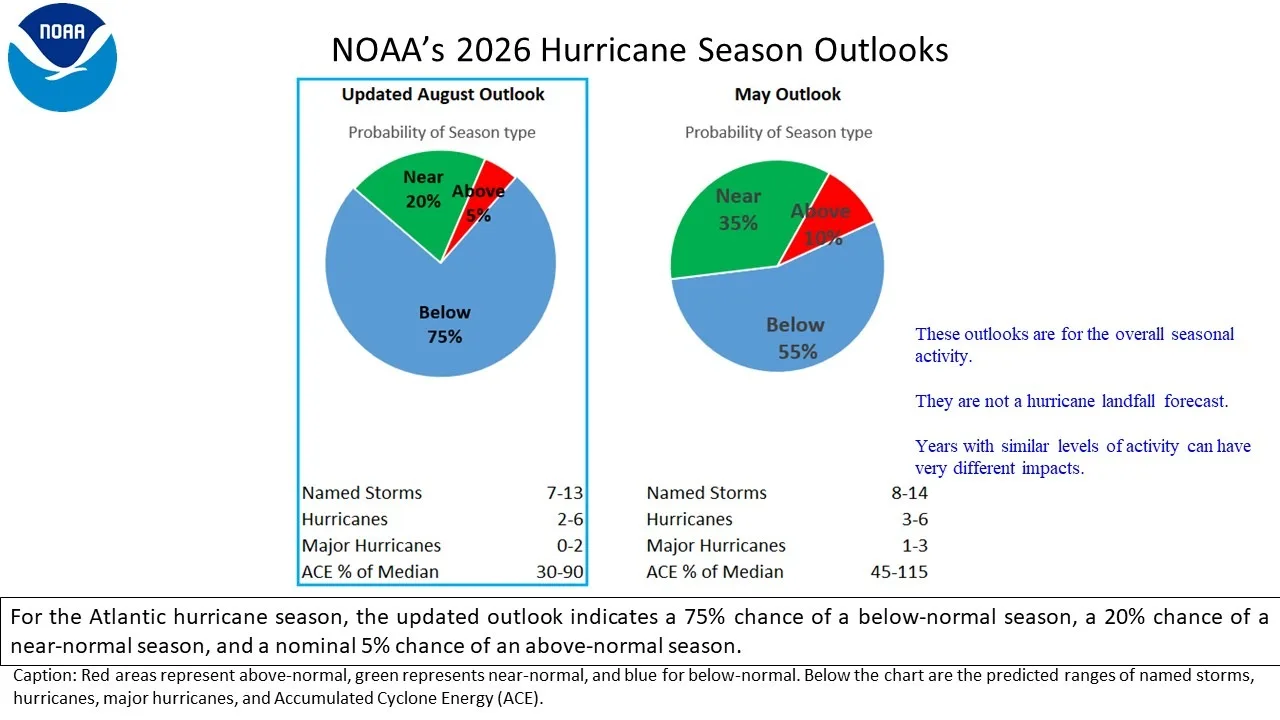
NOAA’s updated 2026 Atlantic hurricane outlook assigns a 75% probability of a below-normal season, a 20% probability of a near-normal season and a 5% probability of an above-normal season. The agency forecasts 7 to 13 named storms, including 2 to 6 hurricanes and 0 to 2 major hurricanes.
NOAA also emphasizes that its seasonal outlook does not predict landfall. Most Atlantic activity occurs during August, September and October, and a single storm can create severe local damage regardless of the total seasonal count.
For Florida contractors, September is the right time to recheck jobsite controls, vehicles, equipment, contracts and claim documentation.
Know What the Forecast Does—and Does Not—Say
Seasonal forecasts describe overall basin activity. They do not tell a contractor whether a specific city, project or yard will be affected.
A lower storm count can also create complacency. Projects remain exposed to wind, rain, flooding, debris, power loss, supply disruption and emergency schedule changes. Contractors may also receive urgent requests for temporary repairs after a storm, when fraud, safety and documentation risks rise.
Base operational decisions on official watches, warnings and local emergency instructions, not on the seasonal label alone.
Review Coverage Before a Storm Is Named
Once a storm threatens, insurers may restrict new business or policy changes. Review coverage while options remain available.
Confirm:
- Property locations, building values and business personal property
- Mobile tools and equipment under inland marine coverage
- Commercial auto vehicles and comprehensive coverage
- Wind or named-storm deductibles
- Flood exposure, which is commonly separate from standard property insurance
- Business income and extra expense terms
- Builders risk responsibility for active projects
- Workers’ compensation and payroll procedures
- Claim reporting contacts and after-hours instructions
A policy’s deductible may be expressed as a percentage. Ask what value the percentage applies to and calculate the potential cash obligation in dollars.
Decide Who Insures Work in Progress
Construction contracts should identify responsibility for materials, temporary structures, partially completed work and builder’s risk. Do not assume the owner’s policy protects every contractor interest.
Review waiver of subrogation, additional insured and property provisions together. Photograph work in progress before the storm and preserve delivery receipts, schedules and change orders. If materials must be moved, document where they went and who authorized the decision.
For projects near completion, verify whether coverage ends at occupancy, acceptance or another triggering event.
Secure Jobsites and Equipment
Create a written shutdown checklist by project type. Assign responsibility and a decision deadline.
Common actions include:
- Remove or secure loose materials, signage, temporary fencing and debris
- Lower or secure equipment according to manufacturer instructions
- Protect roof openings and water-sensitive interiors
- Move tools and mobile equipment to approved locations
- Secure fuel and hazardous materials
- Back up project records and photographs
- Record serial numbers and current condition
- Confirm emergency contacts for owners and subcontractors
- Stop work early enough for employees to prepare safely at home
Never send employees into unsafe conditions to protect replaceable property. Follow evacuation orders and qualified safety direction.
Prepare the Fleet
Move vehicles away from flood-prone lots and trees when safe. Fuel them before demand peaks, check tires and batteries, and verify which employees are authorized to drive.
Commercial auto coverage does not replace safe deployment. After the storm, standing water may hide roadway damage and energized hazards. Establish a return-to-road protocol and do not dispatch crews solely because a client is demanding immediate service.
Strengthen Documentation Before and After
Take timestamped photographs and video of offices, yards, vehicles, tools, stored materials and each active jobsite. Maintain an equipment inventory with serial numbers, purchase information and assigned location.
After a loss:
- Protect people and follow official instructions.
- Prevent additional damage when it is safe and reasonable.
- Notify the insurer promptly.
- Photograph damage before major cleanup.
- Keep damaged property unless instructed otherwise.
- Track labor, equipment, temporary repairs and extra expense.
- Separate storm work by project and customer.
- Avoid promises about coverage or claim payment.
Keep a written log of calls, claim numbers, adjuster visits and decisions.
Screen Post-Storm Opportunities Carefully
Storm response can generate legitimate work and dangerous pressure. Verify licensing requirements, permits, contract terms, customer identity and payment arrangements. Do not perform trades outside the scope disclosed to the insurer.
Florida’s Department of Financial Services advises consumers to verify contractor licensing and ask for proof of liability and workers’ compensation coverage after storms. Contractors should expect that scrutiny and keep accurate documents ready.
If using subcontractors, repeat the full verification process. A rushed certificate from an unknown crew is not a risk-management system.
A 72-Hour Contractor Readiness Check
Complete these items now:
- Save policy numbers and claim contacts offline.
- Calculate wind and named-storm deductibles.
- Update the equipment and vehicle inventory.
- Photograph every active location.
- Review builder’s risk responsibility.
- Confirm subcontractor insurance and emergency contacts.
- Test backups and payroll continuity.
- Assign shutdown and post-storm inspection leaders.
Lite Speed Insurance helps Florida contractors understand where insurance ends and operational preparation begins. A pre-storm review can uncover missing locations, outdated values and contract conflicts before a claim.
FAQs
NOAA’s updated outlook favors a below-normal season, but it does not predict landfall and does not eliminate Florida risk.
General liability is not designed as first-party property coverage for the contractor’s own tools. Inland marine or equipment coverage may be relevant, subject to terms.
Flood is commonly excluded or handled separately. Contractors should verify their specific policies and locations.
Photograph work in progress, property, vehicles, tools and materials; preserve inventories, contracts, receipts and emergency contacts.